7 Proven Strategies to Qualify for a Jumbo Loan in Virginia (Requirements & Rates Explained)
Borrowers financing homes above Virginia’s $806,500 conforming loan limit face stricter jumbo loan requirements and rates, including higher credit thresholds, larger cash reserves, and tighter debt-to-income standards than conventional loans. This guide breaks down seven proven qualification strategies with hard data on credit scores, DTI limits, reserve requirements, and current rate expectations to help Virginia buyers in markets like Short Pump, Glen Allen, and Virginia Beach navigate the …
Credit Score Needed for a Home Loan in Virginia: FHA, VA, Conventional & More
Your credit score needed for a home loan in Virginia depends on the loan program — FHA financing is accessible with scores as low as 580, VA loans have no official minimum, and conventional loans typically require 620 or higher — meaning a single lender’s “no” is rarely the final answer. This guide breaks down exact thresholds by loan type and explains how working with a mortgage broker can open doors that banks routinely close.
7 No Doc Mortgage Loan Options That Actually Work in Virginia
Virginia self-employed borrowers, real estate investors, and gig workers who can’t document income through traditional tax returns have seven legitimate no doc mortgage loan options available — including bank statement loans, DSCR loans, and asset depletion programs — that use alternative verification methods while still meeting federal lending standards.
How to Shop for Mortgage Rates: A Step-by-Step Guide for Virginia Homebuyers
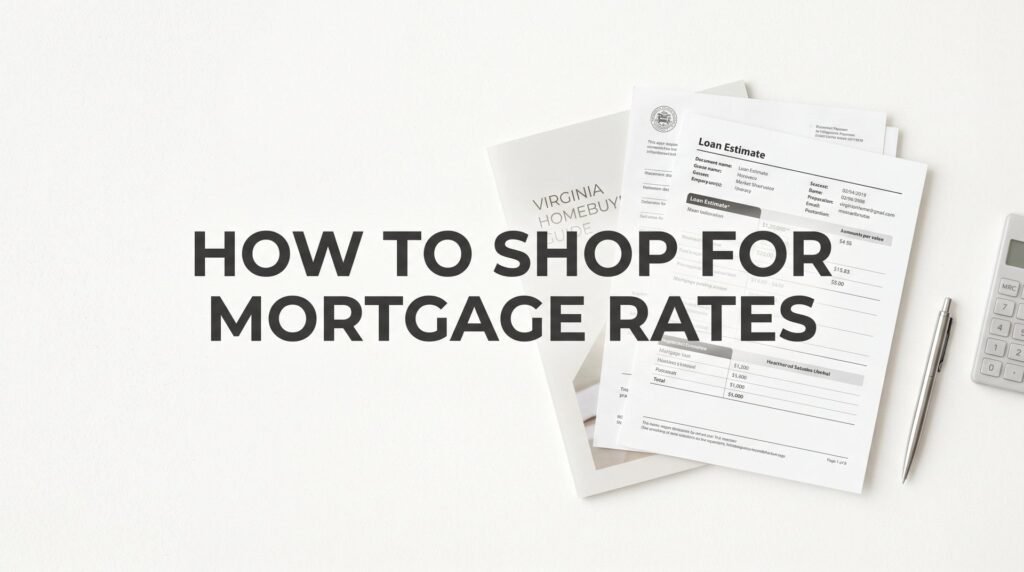
Shopping for mortgage rates the right way can save Virginia homebuyers tens of thousands of dollars over the life of a loan — but most borrowers never compare more than one offer. This step-by-step guide shows how to prepare your financial profile, request apples-to-apples quotes, read a Loan Estimate, and use competing offers as leverage, covering every major Virginia market from Richmond and Chesterfield to Virginia Beach.
VA Loan Funding Fee Explained: What Virginia Veterans Actually Pay (and How to Avoid It)
Virginia veterans using VA loans encounter a mandatory VA loan funding fee explained here in full detail—covering 2025–2026 rate tables, exemption eligibility, and strategies to reduce or eliminate the cost entirely. Understanding this fee upfront helps borrowers accurately compare VA loans against conventional alternatives and make confident financing decisions.
7 Proven Divorce and Mortgage Refinance Options for Virginia Homeowners

Virginia homeowners facing divorce have seven proven mortgage strategies available—from refinancing to remove a spouse to selling and splitting equity—each with specific qualification requirements that affect credit, equity access, and long-term financial independence. Understanding your divorce and mortgage refinance options before finalizing any settlement can protect both parties from costly legal and financial consequences that a divorce decree alone cannot resolve.
No Closing Cost Refinance Pros and Cons: What Virginia Homeowners Need to Know Before Signing
A no closing cost refinance lets Virginia homeowners skip upfront fees of $5,000–$9,000, but those costs don’t disappear — they’re rolled into a higher rate or loan balance. This guide breaks down the real no closing cost refinance pros and cons so Richmond-area borrowers can run the numbers and decide if the long-term tradeoff makes financial sense before signing.
Mortgage Pre-Approval Without a Credit Check: How the No-Touch Credit Process Works in Virginia
Virginia homebuyers can explore loan amounts, rate ranges, and loan types through a soft-pull pre-qualification process that leaves no mark on their credit report — making mortgage pre-approval without a credit check a smart first step before committing to a hard inquiry. This legitimate planning tool helps borrowers get prepared before the right property appears, without the score impact that typically discourages early mortgage conversations.
9 Best Tools for Mortgage Pre-Qualification vs Pre-Approval in Virginia (2026)
This guide compares the 9 best tools for navigating mortgage pre-qualification vs pre-approval in Virginia, helping homebuyers, veterans, and investors evaluate options by credit impact, speed, and loan type coverage—including soft-pull pre-qualification methods that protect your credit score during early home shopping.
7 Alternative Income Verification Mortgage Strategies for Virginia Borrowers Who Don’t Fit the Traditional Mold
Virginia borrowers who are self-employed, freelance, or earn non-traditional income can qualify for a mortgage using alternative income verification strategies—including bank statement loans, DSCR loans, and asset-based programs—that assess real cash flow instead of penalizing legitimate tax deductions. This guide covers seven documented loan options available across Richmond, Chesterfield, Virginia Beach, and Fredericksburg for borrowers who don’t fit the conventional W-2 mold.