

If you’re shopping for a home in Richmond, Chesterfield, Fredericksburg, or anywhere across Virginia, Georgia, Florida, or Tennessee, one question comes up early and often: should I get pre-qualified or pre-approved first, and which tools actually help you do either without damaging your credit score? The answer depends on where you are in your homebuying journey, and the tools you use make a bigger difference than most buyers realize.
This guide covers the top tools homebuyers, refinancers, and real estate investors use to navigate pre-qualification and pre-approval in 2026. Each tool is evaluated on credit impact, speed, lender access, loan type coverage, and Virginia market relevance. Whether you’re a first-time buyer in Glen Allen, a veteran in Hampton Roads, or an investor in Charlottesville, understanding these tools can protect your credit score and put you in a stronger negotiating position.
Pre-Qualification vs. Pre-Approval: What Actually Differs
Before diving into the tools, it’s worth getting precise on definitions. The Consumer Financial Protection Bureau (CFPB) distinguishes the two clearly, and the difference has real consequences for your credit report and your standing with sellers.
Pre-Qualification is an informal estimate of borrowing capacity based on self-reported financial information. No hard credit inquiry is required. It’s used for budgeting and early rate exploration, not for submitting offers.
Pre-Approval is a formal process where a lender verifies income, assets, and employment, and runs a hard credit inquiry. The result is a conditional commitment letter. Sellers and real estate agents treat this as a serious signal of buyer readiness.
The table below summarizes the structural differences:
Feature | Pre-Qualification | Pre-Approval
Credit Pull | Soft (or none) | Hard inquiry
Income Verification | Self-reported | Documented (W-2, tax returns, pay stubs)
Asset Verification | Self-reported | Bank statements required
Time to Complete | Minutes to hours | 1–3 business days typically
Seller Acceptance | Informal signal | Strong signal; often required
Commitment Level | Estimate only | Conditional commitment
Credit Score Impact | None (soft pull) | Small, temporary dip
Best Used For | Budgeting, rate shopping | Active home search, offer submission
One important nuance: not all pre-qualifications are equal. Some lenders run a hard pull at the pre-qualification stage, which means you take the credit hit before you’ve even decided to move forward. The Mortgage Ally’s NoTouch Credit process uses a Vantage Score 4.0 soft pull, meaning no hard inquiry at pre-qualification. That’s a structural distinction worth understanding as you evaluate your options.
Loan Type Quick Reference for Virginia Buyers
Your loan type determines which pre-qualification thresholds apply to you. Here’s a structured reference before you use any of the tools below:
Conventional: Minimum 620 credit score (typical); 3–20% down; PMI required if less than 20% down; conforming loan limit $806,500 for most Virginia counties (verify at FHFA.gov).
FHA: 580 minimum for 3.5% down; 500–579 for 10% down; MIP required; county-level limits at HUD.gov.
VA Loan: No VA-set minimum; lender overlays typically 580–620; 0% down for eligible veterans and active duty; eligibility at VA.gov.
USDA: 640 typical; 0% down; rural areas with income limits apply.
Jumbo: 700+ typical; 10–20% down; loan amounts above $806,500 conforming limit.
Non-QM / Bank Statement: 500+ depending on lender; self-employed, investor, and bank-turndown conversions.
DSCR (Investor): 620+ typical; 20–25% down; rental income qualifies borrower; no personal income documentation required.
1. The Mortgage Ally NoTouch Credit Pre-Qualification
Best for: Virginia buyers who want to explore hundreds of lenders without a credit hit
The Mortgage Ally’s NoTouch Credit Pre-Qualification uses a Vantage Score 4.0 soft pull, meaning your credit report is never hard-inquired during the pre-qualification stage. This is a meaningful structural difference from most retail lenders and several national competitors who hard-pull at first contact.

Where This Tool Shines
As a mortgage broker, The Mortgage Ally shops your scenario across hundreds of lenders simultaneously, rather than presenting a single institution’s product. This matters especially for borrowers in Richmond, Fredericksburg, Hampton Roads, and Charlottesville who are comparing rates across loan types.
The platform accepts credit scores as low as 500 for certain programs, which opens the door for borrowers who have been turned down by banks or credit unions. Self-employed borrowers, real estate investors using DSCR loans, and bank statement loan candidates are particularly well-served here.
Key Features
Soft Pull Only: Vantage Score 4.0 used at pre-qualification; no hard inquiry until you’re ready to proceed.
Hundreds of Lenders: Broker model means your application is compared across a wide lender network, not limited to one institution’s rates and guidelines.
Credit Score Floor of 500: Accepts applications where most retail lenders stop at 620–640.
Non-QM and DSCR Access: Bank statement loans, investor DSCR loans, and turndown conversions available through the lender network.
Free Service: No cost to the borrower; 100% free pre-qualification and rate shopping.
Best For
First-time buyers in Glen Allen or Midlothian who want to understand their options before committing to a hard pull. Also ideal for real estate investors in Hampton Roads or Lake Anna using DSCR financing, and self-employed borrowers in Charlottesville or Roanoke exploring bank statement loans.
Pricing
Free to borrowers. The Mortgage Ally is compensated by the lender upon loan closing, consistent with standard mortgage broker practice.
2. CFPB Owning a Home Tool
Best for: First-time buyers who need a regulatory-grade explanation of the mortgage process
The CFPB’s Owning a Home portal is the federal government’s consumer-facing mortgage education resource, maintained by the Consumer Financial Protection Bureau.

Where This Tool Shines
This is the authoritative source for understanding what lenders are legally required to disclose, what a Loan Estimate means, and how to compare offers across lenders. It’s not a pre-qualification tool itself, but it provides the framework that makes every other tool on this list more useful.
The CFPB’s rate explorer also shows regional rate trend data, which helps Virginia buyers understand whether the rate they’re being quoted is competitive. This is especially useful before entering pre-approval conversations with any lender.
Key Features
Process Walkthrough: Step-by-step explanation of explore, compare, choose, and close phases.
Loan Estimate Explainer: Breaks down every line of the standardized Loan Estimate form lenders must provide.
Rate Trend Data: Regional mortgage rate context from a neutral, non-lender source.
Know Before You Owe: Plain-language explanations of borrower rights and lender obligations.
Best For
Any first-time buyer in Virginia who wants to understand the process before talking to a lender. Also useful for borrowers who have received a Loan Estimate and want to understand what they’re reading.
Pricing
Free. Government resource, no registration required.
3. AnnualCreditReport.com
Best for: Every borrower, before any lender contact
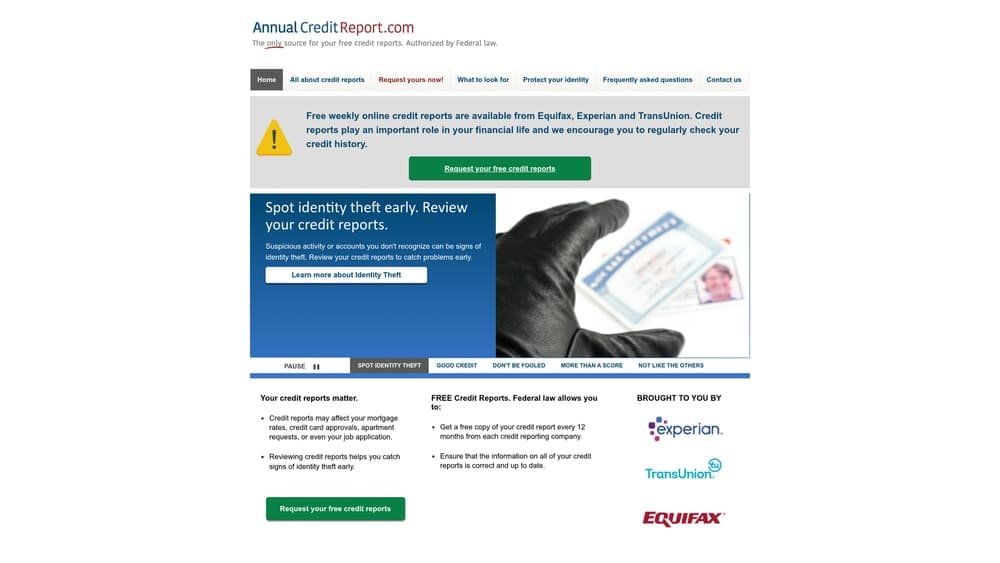
AnnualCreditReport.com is the only federally authorized source for free credit reports from all three major bureaus: Equifax, Experian, and TransUnion. It is mandated under the Fair Credit Reporting Act.
Where This Tool Shines
Pulling your own credit report here is a soft pull and does not affect your score. More importantly, it gives you a chance to identify errors, outdated accounts, or collections before a lender sees them. Disputing inaccuracies before pre-approval can meaningfully change your rate tier.
Mortgage underwriting uses FICO Score 2 (Experian), FICO Score 4 (TransUnion), and FICO Score 5 (Equifax), with the middle score used for qualification. Reviewing your full tri-bureau report here gives you a baseline picture of what lenders will see.
Key Features
Tri-Bureau Reports: Full reports from Equifax, Experian, and TransUnion in one place.
No Score Impact: Soft pull; reviewing your own report does not affect credit.
Error Identification: Dispute inaccurate items before a lender runs a hard pull.
Federally Authorized: The only government-mandated free credit report source under the FCRA.
Best For
Every borrower, without exception, before initiating pre-qualification or pre-approval with any lender. This step should precede all others on this list.
Pricing
Free. Weekly reports are currently available from all three bureaus at no cost.
4. VA.gov Certificate of Eligibility Tool
Best for: Veterans and active-duty service members in Virginia’s military communities
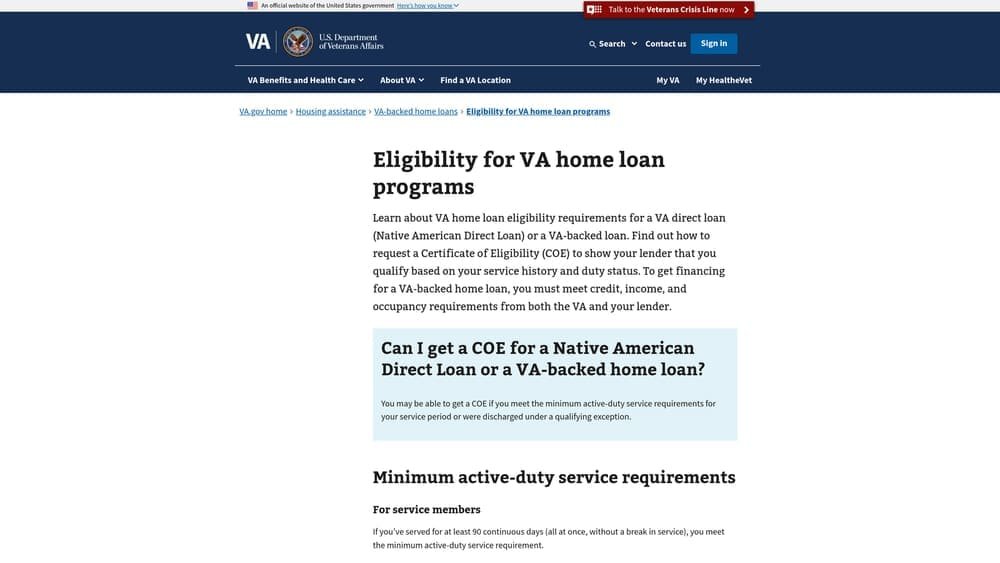
VA.gov’s Certificate of Eligibility (COE) tool allows eligible veterans, active-duty service members, and surviving spouses to confirm VA loan entitlement online, for free, with no credit pull.
Where This Tool Shines
Virginia has one of the largest veteran populations in the country, concentrated in Hampton Roads, Newport News, Williamsburg, Yorktown, Fredericksburg, and Stafford. Before approaching any lender about a VA loan, confirming your COE status takes the guesswork out of eligibility conversations.
VA loans require no down payment and carry no private mortgage insurance, making them one of the most powerful financing tools available. The VA sets no minimum credit score; lender overlays typically run 580–620. Confirming eligibility first allows you to enter pre-qualification with accurate program parameters.
Key Features
Online COE Verification: Confirm entitlement without waiting for paperwork or lender processing.
No Credit Impact: Eligibility check is administrative, not a credit inquiry.
Entitlement Amounts: Shows full vs. remaining entitlement for borrowers who have used VA benefits previously.
Surviving Spouse Eligibility: Covers eligibility verification for qualifying surviving spouses.
Best For
Any veteran or active-duty service member buying or refinancing in Virginia, Florida, Tennessee, or Georgia. Particularly relevant for buyers in Hampton Roads, Newport News, Williamsburg, Stafford, and Fredericksburg.
Pricing
Free. Official government resource at VA.gov.
5. HUD.gov FHA Loan Limits and Lender Search
Best for: Buyers using FHA financing in Chesterfield, Spotsylvania, Stafford, and surrounding Virginia counties
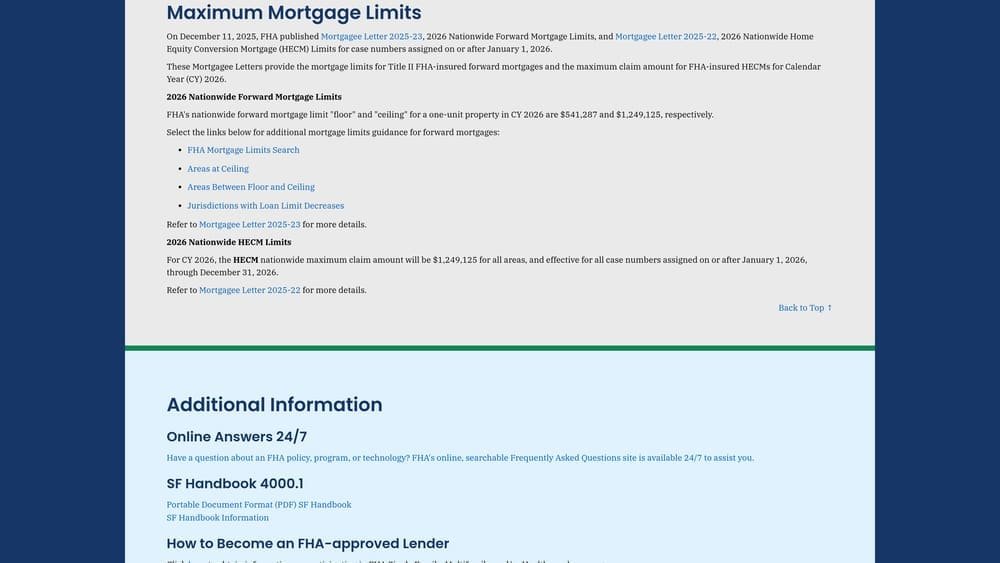
HUD.gov’s FHA loan limits tool provides county-level FHA loan limits and the official approved FHA lender search.
Where This Tool Shines
FHA loan limits vary by county, and Virginia buyers need to confirm the specific limit for their target area before pre-qualification. The HUD tool provides this data at no cost. It also confirms the official credit score floors: 580 for 3.5% down, and 500–579 for 10% down, per HUD guidelines.
The lender search function helps buyers verify that any lender they’re working with is HUD-approved for FHA origination. This is a useful due diligence step before committing to a pre-approval process with any lender.
Key Features
County-Level Loan Limits: Exact FHA loan limits for every Virginia county, updated annually.
Credit Score Floors: Official documentation of the 580 and 500 thresholds from HUD.
Approved Lender Search: Verify FHA lender status by state, county, or lender name.
MIP Information: Mortgage Insurance Premium details for FHA borrowers.
Best For
Buyers in Chesterfield, Spotsylvania, Stafford, Hanover, and other Virginia markets using FHA financing. Also useful for buyers with credit scores between 500 and 619 who need to confirm their program options before approaching lenders.
Pricing
Free. Official HUD government resource.
6. Fannie Mae HomeReady Eligibility Tool
Best for: Conventional loan borrowers exploring low-down-payment options
Fannie Mae’s consumer-facing homebuyer resources include eligibility guidance for the HomeReady program, which allows 3% down on conventional loans with expanded income flexibility.
Where This Tool Shines
Fannie Mae’s Desktop Underwriter (DU) is the automated underwriting engine behind most conventional loan approvals. While DU itself is lender-only, Fannie Mae’s consumer site helps buyers understand the eligibility thresholds, income layering rules, and property eligibility criteria that DU evaluates.
For Virginia buyers in Richmond metro markets like Short Pump, Glen Allen, and Henrico, where median home prices in many areas run in the $390,000–$430,000 range, understanding HomeReady income limits and eligibility criteria before pre-qualification saves time and sets accurate expectations.
Key Features
HomeReady Eligibility Guidance: Income limits, property eligibility, and program requirements explained for consumers.
3% Down Conventional: Covers the structural requirements for Fannie Mae’s low-down-payment conventional option.
AMI Lookup: Area Median Income lookup to determine HomeReady eligibility by location.
Homebuyer Education Resources: Framework education that satisfies HomeReady course requirements.
Best For
First-time buyers in Richmond, Henrico, Chesterfield, and Charlottesville who want to use conventional financing with a lower down payment and need to understand program thresholds before pre-qualifying.
Pricing
Free consumer resource. HomeReady course completion (if required) may carry a nominal fee through approved providers.
7. The Mortgage Ally Home Refinance Calculator
Best for: Homeowners in Virginia modeling refinance scenarios before seeking pre-approval
The Mortgage Ally’s Home Refinance Calculator helps existing homeowners calculate potential payment savings, breakeven timelines, and cash-out refinance scenarios before initiating a formal pre-approval process.
Where This Tool Shines
Refinancing decisions should never be made without running the breakeven math first. The breakeven formula is straightforward: divide your estimated closing costs by your projected monthly payment savings. The result tells you how many months it takes to recover the cost of refinancing. If you plan to stay in the home beyond that point, refinancing likely makes financial sense.
Here’s an example of how that math works in practice. Assume a current loan balance of $350,000 at a higher rate, refinancing to a lower rate with $7,000 in closing costs and a monthly payment savings of $175. Breakeven calculation: $7,000 ÷ $175 = 40 months, or approximately 3.3 years. If you plan to stay in the home longer than 40 months, the refinance pays off. If you’re planning to sell within two years, it likely does not.
Key Features
Breakeven Calculator: Shows how many months until closing costs are recovered through payment savings.
Cash-Out Modeling: Models cash-out refinances up to 90% LTV, which exceeds most retail lender limits of 80%.
Rate Comparison Input: Enter current rate and target rate to see side-by-side payment impact.
Pre-Approval Pathway: Connects directly to NoTouch pre-qualification after modeling, maintaining soft-pull protection.
Best For
Homeowners in Goochland, Louisa, Lake Anna, Ashland, and throughout the Richmond metro who are considering refinancing and want to model the math before committing to a hard credit pull.
Pricing
Free calculator tool, no registration required.
8. Rocket Mortgage Pre-Approval Tool
Best for: High-credit borrowers who want a fully digital, single-lender pre-approval experience
Rocket Mortgage’s online pre-approval tool is one of the most widely used digital mortgage platforms in the country. It offers a fast, technology-forward pre-approval experience with a streamlined document upload process.
Where This Tool Shines
Rocket Mortgage is genuinely strong for borrowers with solid credit profiles (typically 700+) who want a fully digital experience and are comfortable with a single-lender pricing model. The platform’s speed and user interface are well-regarded, and the pre-approval process can often be completed quickly.
The honest structural distinction worth understanding: Rocket Mortgage is a direct lender, not a broker. That means the rates and programs available are limited to Rocket’s own product set. For borrowers whose scenarios fit neatly into conventional or FHA guidelines, this works well. For self-employed borrowers, investors, or those with credit challenges, a broker model with access to multiple lenders typically provides more options.
Key Features
Fully Digital Process: Document upload, income verification, and pre-approval letter generation handled online.
Fast Turnaround: Pre-approval decisions often delivered quickly for straightforward files.
Conventional and FHA Coverage: Strong product access for standard loan types.
Hard Pull at Pre-Approval: Uses a hard credit inquiry as part of the formal pre-approval process.
Best For
Borrowers with 700+ credit scores, W-2 income, and straightforward financial profiles who want a fully digital experience and are not comparison-shopping across lenders.
Pricing
Free pre-approval tool. Loan fees and rate structure are built into the lender’s pricing model.
9. Credit Karma and Experian Free Score Monitoring
Best for: Borrowers tracking credit trends in the months before pre-qualification
Credit Karma and Experian’s free credit monitoring provide ongoing credit score tracking and report alerts at no cost. Both are widely used tools for pre-mortgage credit preparation.
Where This Tool Shines
These platforms are valuable for monitoring credit trends over time, catching new derogatory items quickly, and understanding the general direction of your credit health. The alerts for new accounts, inquiries, and balance changes are genuinely useful in the months before you plan to buy.
There is one critical caveat every mortgage borrower needs to understand: the scores shown on Credit Karma and Experian’s free platform are VantageScore models, not the FICO Score 2, 4, and 5 models used in mortgage underwriting. The gap between your VantageScore and your mortgage FICO can be meaningful. Use these tools for trend monitoring and alert purposes, not as a precise predictor of mortgage qualification.
Key Features
Free Ongoing Monitoring: Regular score updates and report change alerts at no cost.
New Account Alerts: Notifications for new inquiries or accounts that could signal identity issues.
Score Factor Breakdown: Explains which factors are helping or hurting your score.
VantageScore Model: Important to note this differs from mortgage FICO scoring models used by lenders.
Best For
Buyers in the 6–12 months before they plan to purchase who want to monitor credit trends and catch potential issues early. Not a substitute for pulling your full tri-bureau report at AnnualCreditReport.com before lender contact.
Pricing
Free for both platforms. Experian offers paid upgrade tiers with additional features, but the free tier is sufficient for monitoring purposes.
Rate Payment Reference Table
The following table uses a 30-year fixed rate benchmark. Borrowers should verify current rates at the time of application through the CFPB or Freddie Mac’s Primary Mortgage Market Survey (PMMS). Rates fluctuate daily and the figures below are illustrative using a 6.75% benchmark rate as of mid-2026 for structural reference only. Confirm actual rates with your lender.
Loan Amount | Rate (30yr Fixed) | Monthly P&I | Total Interest (30yr)
$300,000 | 6.75% | $1,945 | $400,200
$400,000 | 6.75% | $2,594 | $533,840
$500,000 | 6.75% | $3,242 | $667,120
$806,500 (conforming limit) | 6.75% | $5,230 | $1,082,800
Note: Monthly P&I figures are principal and interest only. They do not include property taxes, homeowner’s insurance, PMI, or HOA fees. All figures are illustrative. Verify current rates before making any financial decision.
Which Tool Is Right for Your Situation
The right starting point depends on where you are in the process. Here’s a quick-reference guide by situation:
First-time buyer, not sure where to start: Begin with AnnualCreditReport.com to review your credit, then use the CFPB Owning a Home tool to understand the process, then start a NoTouch pre-qualification through The Mortgage Ally to see what programs you qualify for without a credit hit.
Veteran buying in Hampton Roads, Fredericksburg, or Williamsburg: Confirm your COE at VA.gov first, then initiate pre-qualification with a lender who has VA loan expertise and access to multiple VA-approved lenders.
FHA buyer in Chesterfield, Spotsylvania, or Stafford: Check county-level loan limits at HUD.gov, confirm your credit score tier (580 or 500), then pre-qualify with a lender who can access FHA programs across multiple lenders.
Self-employed borrower or real estate investor: Standard retail lenders may decline your file. Start with The Mortgage Ally’s NoTouch pre-qualification, which accesses non-QM and DSCR programs through the broker network. This is where the multi-lender model provides the clearest advantage over single-institution lenders.
Homeowner considering refinancing: Run the breakeven math first using The Mortgage Ally’s refinance calculator before initiating any pre-approval process. If the breakeven timeline works for your plans, then proceed.
High-credit W-2 borrower who wants digital speed: Rocket Mortgage is a legitimate option for straightforward conventional files. Understand you’re receiving single-lender pricing and should compare that offer against a broker-sourced rate before committing.
Frequently Asked Questions
Q: What is the difference between mortgage pre-qualification and pre-approval?
A: Pre-qualification is an informal estimate based on self-reported information with no hard credit pull. Pre-approval involves verified income, assets, employment, and a hard credit inquiry, resulting in a conditional commitment letter. Sellers and agents treat pre-approval as a significantly stronger signal.
Q: Does pre-qualification hurt my credit score?
A: A soft-pull pre-qualification, like The Mortgage Ally’s NoTouch Credit process using Vantage Score 4.0, does not impact your credit score. A hard-pull pre-approval creates a small, temporary dip. The key is knowing which type of pull a lender uses before you authorize it.
Q: How long is a pre-approval letter valid in Virginia?
A: Typically 60–90 days, though this varies by lender. If your home search extends beyond that window, you will need to renew your pre-approval, which involves another credit pull.
Q: What credit score do I need to get pre-qualified?
A: The Mortgage Ally accepts credit scores as low as 500 for certain loan programs. Conventional loans typically require 620 or higher. FHA allows 580 for 3.5% down and 500 for 10% down per HUD guidelines (source: HUD.gov). VA loans have no VA-set minimum; lender overlays typically run 580–620.
Q: Can I get pre-approved if a bank already turned me down?
A: Yes. A mortgage broker with access to non-QM lenders can often find programs for borrowers who don’t fit traditional bank underwriting criteria, including self-employed borrowers, real estate investors, and those with credit challenges. The broker model exists precisely to bridge this gap.
Q: What’s the difference between a mortgage broker and a direct lender for pre-approval?
A: A mortgage broker shops your application across hundreds of lenders to find the best rate and terms. A direct lender, whether a bank, credit union, or retail mortgage company, can only offer their own products. For borrowers with complex files or those who want to comparison-shop, the broker model typically provides more options and competitive pricing.
Q: Which Virginia cities does The Mortgage Ally serve?
A: The Mortgage Ally serves buyers and homeowners throughout Virginia, including Richmond, Short Pump, Glen Allen, Chesterfield, Midlothian, Henrico, Hanover, Ashland, Goochland, Fredericksburg, Spotsylvania, Stafford, Prince William, Caroline County, Charlottesville, Albemarle, Williamsburg, Yorktown, Hampton Roads, Newport News, Chesapeake, Virginia Beach, Suffolk, Lake Anna, Louisa, Roanoke, and Lynchburg. Service also extends to Florida, Tennessee, and Georgia.
Understanding the difference between pre-qualification and pre-approval is not just a technicality. It affects your credit score, your standing with sellers, and your ability to compare lenders accurately. The tools on this list cover every stage of that process, from pulling your own credit report before any lender contact, to confirming VA eligibility, to running refinance breakeven math before committing to a hard pull.
If you’re ready to explore your options without a credit hit, Learn more about our services and start a free NoTouch Credit pre-qualification through The Mortgage Ally. You’ll get access to hundreds of lenders, programs from conventional to non-QM, and guidance from a licensed mortgage professional, with no hard inquiry until you decide to move forward.
This article is for educational purposes only and does not constitute financial, legal, or tax advice. Mortgage rates, loan limits, and program guidelines are subject to change. All loan approvals are subject to underwriting review and program eligibility. Rate figures included in this article are illustrative only and do not represent a commitment to lend or a guaranteed rate. Borrowers should verify current rates and loan limits with their lender at the time of application. The Mortgage Ally is licensed to originate mortgages in Virginia, Florida, Tennessee, and Georgia. Equal Housing Opportunity.
Duane Buziak, Mortgage Maestro | NMLS: 1110647 | Licensed in VA · FL · TN · GA | VA Broker of the Year 2024–2025 | Top 1% Nationwide | Coast2Coast Mortgage | DuaneBuziakMortgageMaestro.com | (804) 212-8663