

Self employed mortgage difficulties come down to one issue: underwriters qualify you on documented, averaged taxable income, not on what your business earns or deposits. A owner who nets strong cash flow but writes off aggressively can look like a modest earner on paper, and the file is judged on the paper.
The good news is that this is mostly a documentation and program-fit problem, not a verdict on your business. Below, I explain why write-offs, income swings, and paperwork gaps cause trouble, what to fix before you apply, and which loan paths fit which situations.
By Duane Buziak, NMLS #1110647
Why Underwriters Treat Self-Employed Income Differently
Qualifying income is the monthly figure an underwriter is willing to count toward your loan. For a W-2 employee it is simple: a base salary or hourly rate, confirmed by recent pay stubs and a verification of employment. The number is fixed, and the employer stands behind it.
For a self-employed borrower, qualifying income is generally your net income after business deductions, usually averaged across two years of tax returns. The underwriter starts with what the return says, then makes a limited set of adjustments. Depreciation, for example, is a non-cash expense that can often be added back. Meals, vehicle expenses, and most other write-offs stay deducted.
Who counts as self-employed matters because it triggers extra paperwork. Under the Fannie Mae Selling Guide, a borrower with an ownership interest of 25% or more in a business is generally treated as self-employed and must supply business documentation in addition to personal returns. Confirm the current wording in Fannie Mae’s Selling Guide (section B3-3.2 covers self-employed income), since guidelines are updated periodically. Owning a minority stake in a partnership or S corporation can still put you in this category.
Underwriting sees higher risk for two reasons:
- Variability. A paycheck repeats. Business income can swing with seasons, clients, and the economy, so underwriters want evidence that it will continue.
- Entanglement. Business and personal finances are often tied together through shared accounts, personal guarantees, and owner draws. A problem in the business can become a problem in your repayment ability.
Federal rules also shape this. The CFPB’s Qualified Mortgage framework requires that a borrower’s ability to repay be verified with reasonably reliable records. Tax returns are the cleanest record, which is why agency loans lean on them so heavily.
The Five Most Common Roadblocks (and What Triggers Each)
1. Write-offs shrink qualifying income
Say a business owner has $140,000 in gross profit, then deducts down to $62,000 on Schedule C, the IRS form where sole proprietors report business profit or loss. Good tax planning. But the underwriter qualifies that borrower on the lower figure, about $5,167 a month. Every write-off is a reduction in borrowing power.
2. Income that declined
Underwriters compare year over year. When income drops, they may use the lower year or an average, and a decline can trigger deeper review, including Fannie Mae’s cash flow analysis worksheet, Form 1084. Exact treatment depends on the size of the decline and the reasons behind it, so verify against the current guide.
3. Short self-employment history
Agencies commonly want two years of self-employment. Exceptions can exist when you have a documented prior track record in the same field, such as years as an employee doing the same work at similar pay, but these are guideline-specific and change over time. As of September 2026, confirm the current standard before assuming you qualify or don’t.
4. Messy accounts and tax issues
Three file problems come up repeatedly: personal and business money mixed in one account, large deposits with no paper trail, and unpaid tax liabilities or IRS payment plans. Each forces an explanation, and an unresolved tax debt can stop a file outright or add a required monthly payment to your debts.
5. Credit and debt-to-income surprises
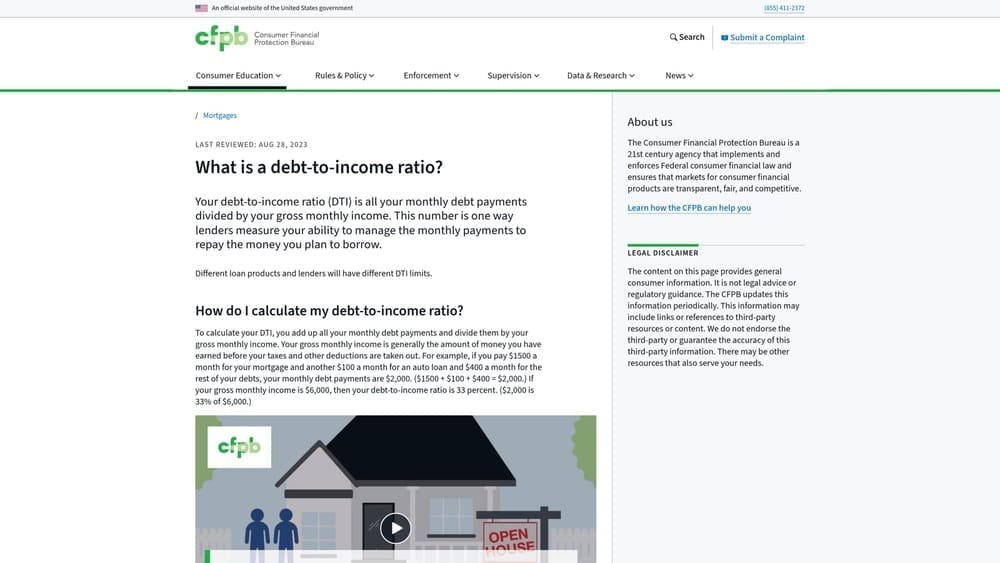
Debt-to-income (DTI) is your monthly debt payments, including the new mortgage, divided by qualifying monthly income. Because your income is already reduced by write-offs, DTI climbs fast. Business debt that appears on your personal credit report, such as a vehicle loan or a card you guaranteed, is usually counted unless you can document that the business pays it. That documentation is another item to gather early.
Documents to Gather Before You Apply
Requirements vary by program, but a typical self-employed file includes:
- Two years of personal tax returns with all schedules
- Two years of business returns (1120S, 1065, or 1120) if you own a corporation or partnership
- A year-to-date profit and loss (P&L) statement, meaning a summary of revenue and expenses for the current year so far
- A business license, or a letter from a CPA confirming how long the business has operated
- Two to three months of personal and business bank statements
In the months before applying, a few steps can save a file. Separate business and personal accounts so deposits are easy to trace. Write a short explanation for any unusual deposit while you still remember its source. Avoid new debt, including financing for equipment or a vehicle. And file returns, or amend them, on time, because an unfiled year usually stops agency underwriting entirely.
Before any of that, Duane Buziak can run a review through the NoTouch Credit Pull. It is a soft credit pull mortgage review, so you can see which programs your profile fits without a hard inquiry on your report. That matters because you may be comparing several paths, and you should not pay a credit score penalty just to find out which one works.
A tip worth acting on: ask your CPA for a year-to-date P&L before the first conversation with a broker, not after a denial. It shows current-year strength that last year’s return cannot, and it is required by many programs anyway.
Loan Paths When Tax Returns Understate Your Income
Agency (conventional) loans generally offer the best pricing, and they can work well when your returns show strong income. The tradeoff is total reliance on tax documentation. If write-offs pushed your net income down, this path may not reach the loan amount you want.
Bank statement loans are a type of Non-QM product, meaning a loan that does not follow the Qualified Mortgage documentation rules agencies use. Instead of tax returns, income is estimated from 12 to 24 months of deposits, usually after applying an expense factor to reflect business costs. These loans typically carry higher rates and larger down payments than agency loans. Pricing varies daily and by borrower, so verify current terms as of today’s date rather than relying on any published average.
The Champions Funding Ally No-Ratio program is a CDFI-certified Non-QM product designed for self-employed and non-traditional-income borrowers. It differs from agency loans in that it is not built around your tax-return net income. Duane Buziak originates it directly as a Champions-appointed broker. Specifics such as minimum credit score, maximum loan-to-value, and required documentation depend on your file and can change, so I confirm them on your actual scenario before quoting anything.
One clarification, because the names overlap: The Mortgage Ally by Duane Buziak is an independent mortgage brokerage and is not affiliated with Ally Bank. The Champions “Ally” program is a separate product from a separate company, and neither one is connected to Ally Bank.
Worked Example: $140,000 Gross Profit, $62,000 on the Return
This is an illustration only. All rates and payments are hypothetical and not quotes; rates change daily and depend on credit, down payment, and the program.
Suppose a Virginia sole proprietor earns $140,000 in business profit before deductions, and reports $62,000 net on Schedule C. Buying a $350,000 home, they carry $600 a month in other debt (a car loan and cards) and $450 a month for taxes and insurance.
Income under each view:
- Agency qualifying income: $62,000 / 12 = about $5,167 a month
- True cash flow: $140,000 / 12 = about $11,667 a month
Agency path (illustrative): 10% down leaves a $315,000 loan. At a hypothetical 6.5% for 30 years, principal and interest is about $1,991. Add $450 and $600 and total monthly obligations are about $3,041. Divided by $5,167, DTI is roughly 59%, well beyond what agency underwriting typically accepts. The borrower fails.
Bank statement path (illustrative): 15% down leaves a $297,500 loan. At a hypothetical 8.0%, principal and interest is about $2,183. Total obligations are about $3,233. If deposit analysis supports income near the full $11,667 (actual results depend on the expense factor applied), DTI is roughly 28%. The borrower may pass.
The tradeoff: the Non-QM loan costs more each month, about $192 more in principal and interest in this example, despite the smaller balance. But it gets the borrower into the home. If the next two returns show higher reported income, say $110,000 net, or about $9,167 a month, a refinance into an agency loan may become realistic, and the higher rate would be temporary. Whether that pays off depends on closing costs and where rates stand then.
Comparison Table: How Your Options Stack Up
| Feature | Agency loan | Bank statement (Non-QM) | Champions Ally No-Ratio via Duane Buziak | Large online retail provider (e.g., Rocket, Movement) |
|---|---|---|---|---|
| Income documentation | Two years of tax returns, business returns, P&L | 12 to 24 months of bank statements, sometimes a P&L | Non-QM documentation; confirm specifics for your file | Depends on the loan chosen; agency and jumbo programs follow standard documentation |
| Credit flexibility | Set by agency and automated underwriting rules | Often more flexible than agency, varies by program | Confirm on your file | Follows the guidelines of the program it offers |
| Typical down payment | Can be low, often 3% to 5% and up | Commonly 10% to 20% or more | Confirm on your file | Varies by program |
| Pricing tendency | Generally lowest | Generally higher than agency | Non-QM pricing; verify as of today | Competitive on the programs it offers |
| Best fit | Returns show strong net income | Write-offs hide true cash flow | Self-employed or non-traditional income needing an alternative path | Straightforward, well-documented files |
Rocket and Movement are national retail providers with agency and jumbo loan programs. I have left their Non-QM offerings out of the table because I cannot verify them here, so check directly with any provider you consider.
The structural difference is that a broker can compare hundreds of loan sources for one self-employed file, while a single retail provider can offer only its own products. When the right fit depends on how your income is documented, that range of options matters more than a small pricing edge.
Solving Self-Employed Mortgage Difficulties Starts With Choosing the Right Loan
A denial rarely means your business is the problem. Most self-employed mortgage difficulties trace back to how income is documented and whether the loan program matches that documentation. Fix the paperwork, or pick a program built for your income, and the picture often changes.
Your dream home is within reach. Discover what hundreds of loan programs can offer you in one simple search, with no credit hit mortgage application required to get started. Get your free mortgage rate quote today and let Duane Buziak at The Mortgage Ally by Duane Buziak shop the market to secure you the best possible terms with a client-first approach.