

Choosing between FHA and conventional financing shapes your down payment, monthly mortgage insurance, and long-term equity, and most buyers compare rate alone instead of total cost. Duane Buziak, NMLS #1110647, walks clients through both programs side by side before locking anything, because the “cheaper” option on paper often isn’t the cheaper option over a five-year hold. These seven strategies help you run the real numbers before you commit to a program.
1. Run a Worked Dollar Example Before You Choose
Rate quotes alone hide the real cost of a loan. FHA and conventional financing both carry mortgage insurance, but the structure is different enough that the “lower rate” program can still cost more over time once insurance premiums are added in.
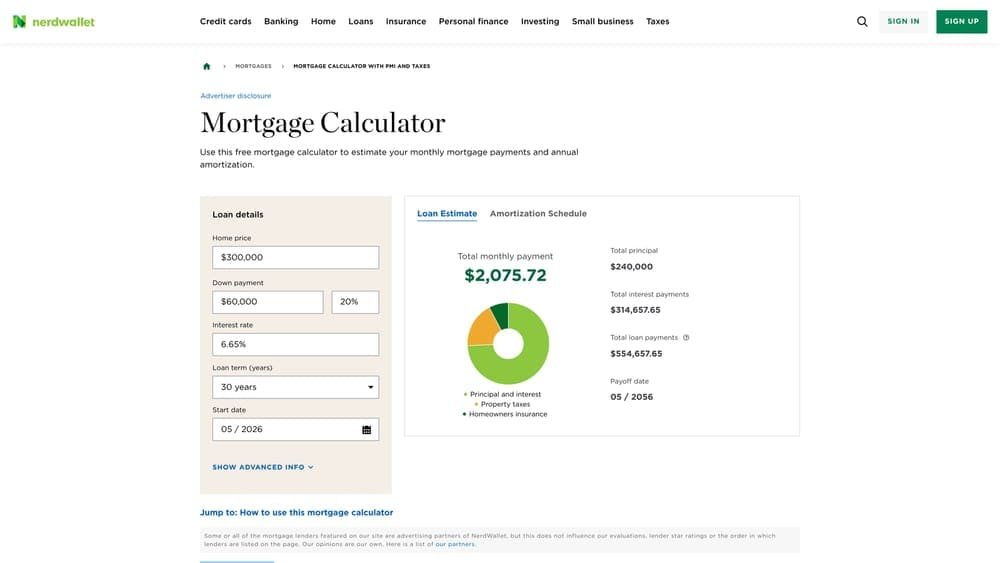
Consider a $350,000 Virginia purchase with 5% down ($17,500), leaving a $332,500 loan. A conventional loan at that LTV might carry monthly PMI in the neighborhood of $145 to $180 depending on the borrower’s credit tier. An FHA loan at 3.5% down adds a 1.75% upfront mortgage insurance premium (UFMIP), financed into the loan balance, plus an annual MIP currently running around 0.55% for most 30-year terms under $726,200. Exact current factors should always be verified against HUD’s Handbook 4000.1 before quoting a client, since MIP factors are adjusted periodically.
- Pull both scenarios through a mortgage calculator using the buyer’s actual credit score and loan amount.
- Add upfront costs (UFMIP financed vs. any conventional LLPA impact on rate) to the comparison.
- Compare cumulative cost at year 1, year 5, and year 7, not just the first payment.
The common mistake is stopping at the first monthly payment. FHA often looks cheaper in month one because the down payment is smaller, but the cumulative insurance cost over a five-to-seven-year hold frequently flips the advantage to conventional, especially for borrowers with scores above 680. Measure the cumulative principal, interest, and mortgage insurance total at the five-year and seven-year marks, not the sticker payment.
2. Check Where Your Credit Score Actually Lands
Conventional pricing runs on loan-level price adjustments (LLPAs), which increase in cost as credit score drops and LTV rises. FHA underwriting is more forgiving of lower scores, which means the program that “sounds standard” isn’t automatically the cheaper one once you look at your actual tier.
A borrower at 600 FICO may land a better effective rate through FHA than through conventional financing carrying steep LLPAs for that score band, while a borrower at 760 FICO with 10% down often prices better conventional, since PMI at that tier is inexpensive and there’s no UFMIP to finance.
To see this without risking your score, request a soft credit pull mortgage pre-approval that shows FHA and conventional pricing side by side with no hard inquiry. The mistake to avoid is assuming conventional wins by default because it’s the “default” program most buyers picture. Measure the rate spread between the two quotes at your actual credit tier before ruling either one out.
3. Compare Mortgage Insurance Duration, Not Just the Rate
Duration matters more than the monthly figure. Under the Homeowners Protection Act, conventional PMI is automatically terminated once the loan reaches 78% of the original value through scheduled payments, and many borrowers can request earlier removal at 80% LTV with sufficient appreciation. Details on cancellation rights are outlined by the Consumer Financial Protection Bureau.
FHA works differently. Loans originated with less than 10% down typically carry annual MIP for the life of the loan, with no automatic cancellation point, regardless of how much equity builds. A borrower who puts 3.5% down and plans to stay in the home a decade or more should model that MIP cost across the full hold period, not just the first few years.
Ask your broker for an amortization schedule showing the projected month PMI would cancel on the conventional side, compared to the FHA MIP schedule that continues indefinitely under those terms. The common mistake is assuming you’ll simply refinance out of FHA MIP later without factoring in the closing costs, appraisal fees, and rate risk that a future refinance carries. Measure the projected month or year mortgage insurance ends, or confirm that it doesn’t, under each program before you sign.
4. Get Pre-Qualified for Both Without a Hard Credit Hit
Comparing FHA and conventional terms doesn’t require multiple credit pulls. A single soft-pull mortgage pre-approval process can generate comparative FHA and conventional pre-qualification terms from one application, preserving your credit score while you shop.
- Submit income, asset documentation, and credit authorization for a no credit hit mortgage pre-approval.
- Request both FHA and conventional outputs in the same disclosure package.
- Compare estimated payment, cash to close, and mortgage insurance side by side before choosing a program.
- Lock the program and rate only after both scenarios are reviewed.
The mistake many buyers make is applying separately with several retail lenders, each triggering its own hard inquiry, which can temporarily lower the score right before closing, sometimes enough to shift pricing tiers. Measure the number of hard inquiries generated during your shopping period; the target is zero until you submit a formal application on the program you’ve chosen.
5. Match Your Down Payment Source to Program Rules
Down payment source rules differ enough between programs that the wrong assumption can stall a closing. FHA guidelines generally allow gift funds to cover the entire 3.5% down payment and closing costs with straightforward documentation. Conventional guidelines can require a portion of funds to come from the borrower’s own assets at certain LTVs and property types, depending on the specific loan program and investor guidelines.
Illustration: a first-time buyer receiving 100% of their down payment as a gift from a parent typically has a more direct path under FHA than under a conventional loan requiring seasoned borrower funds at a higher LTV. Documenting the gift letter and source of funds early, before the offer is even written, lets your broker confirm which program accepts that funding structure with the fewest conditions.
The common mistake is assuming gift fund rules are identical across both programs, then discovering a documentation gap mid-underwriting, which can delay closing by days or weeks. Measure the number of underwriting conditions tied to funds-to-close documentation; fewer conditions means a smoother path to the closing table.
6. Weigh Property Condition and Appraisal Standards
FHA appraisals apply minimum property standards that go beyond value, checking for health and safety issues like roof condition, peeling paint, exposed wiring, and functioning mechanical systems. Conventional appraisals focus primarily on value and marketability. Details on FHA’s standards are published in HUD Handbook 4000.1.
An older home with a deferred-maintenance roof may trigger repair conditions or a required escrow under FHA, while the same property could appraise conventionally without any repair requirement. Non-warrantable condos present a similar risk: some condo projects that don’t meet FHA’s approved-project list will kill an FHA-financed contract outright, even when the unit itself is in good condition.
Have your buyer’s agent flag visible condition issues before writing the offer, then choose the loan program whose appraisal standard matches the property’s actual condition. The mistake to avoid is locking into FHA financing on a distressed property or a non-warrantable condo and losing the contract to a failed appraisal or condo rejection weeks into the transaction. Measure appraisal turnaround time and the number of repair conditions required to close; zero or minimal conditions is the goal.
7. Plan Your Refinance Exit Strategy Now
The program you choose at purchase should account for how you plan to exit mortgage insurance later, whether that’s an FHA streamline refinance, a conventional PMI-removal request, or a full rate-and-term refinance once rates improve.
A buyer who expects to refinance within three to five years for a rate improvement may lean toward FHA’s streamline refinance, which uses reduced documentation and, in many cases, no new appraisal. A buyer who expects to build equity quickly through extra principal payments or a rising local market may prefer conventional financing, since PMI can be requested for removal once the loan reaches 80% LTV without needing to refinance at all.
Set a target equity level or rate-drop trigger at closing, then revisit the FHA streamline refinance or conventional PMI-removal request once that trigger is met. As of September 2026, the FHFA conforming loan limit for most of Virginia sits at the national baseline, though high-cost areas of Northern Virginia carry a higher ceiling; check current figures at FHFA.gov before assuming your loan amount qualifies for conventional financing at all. The common mistake is choosing FHA purely for the lower down payment without ever planning how or when to exit the MIP obligation. Measure the break-even month for a future refinance, comparing projected savings against expected closing costs, before you lock your exit plan.
FHA vs. Conventional at a Glance
- Minimum down payment: FHA typically 3.5% with a 580+ score; conventional as low as 3% for qualified first-time buyers, generally 5% otherwise.
- Upfront mortgage insurance: FHA charges a 1.75% UFMIP financed into the loan; conventional has no upfront MI, though LLPAs can raise the rate.
- Annual mortgage insurance: FHA annual MIP runs roughly 0.55% for most 30-year loans under the standard loan limit (verify current factor at HUD.gov); conventional PMI varies by credit score and LTV, often $50 to $200+ monthly per $100,000 financed.
- Mortgage insurance duration: FHA MIP often lasts the life of the loan below 10% down; conventional PMI cancels automatically at 78% LTV per the Homeowners Protection Act.
- Credit flexibility: FHA accommodates scores down to 580 (500 with 10% down in some cases); conventional pricing penalizes scores below roughly 680 through LLPAs.
- Property standards: FHA requires minimum property standards and condo project approval; conventional appraisals focus mainly on value and marketability.
- Refinance path: FHA offers a streamline refinance with reduced documentation; conventional relies on PMI removal requests or a standard rate-and-term refinance.
Duane Buziak, NMLS #1110647, notes that Coast2Coast Mortgage LLC (NMLS #376205) shops both FHA and conventional pricing across its lender network on every dual-qualified file, alongside programs offered by other originators such as Rocket, Movement, NFM Lending, and Veterans United, so buyers can see where their actual numbers land rather than relying on generic rate charts.
Choosing Your Starting Point
Start with the worked dollar example and a soft-pull dual pre-qualification, strategies one and four. Together they reveal your real cost gap between FHA and conventional financing before you touch your credit or commit to either program, and every other strategy on this list builds on those two numbers. Once you know your cumulative cost difference and have both sets of terms in hand without a hard inquiry, the credit-tier check, mortgage insurance duration review, down payment documentation, appraisal fit, and refinance exit plan become much faster decisions rather than open questions.
Your dream home is within reach. Discover what hundreds of lenders can offer you in one simple search with zero impact to your credit score. Get your free mortgage rate quote today and let The Mortgage Ally by Duane Buziak shop the market to secure you the best possible terms with a client-first approach.