
Picture this: you’re a homebuyer in Henrico County, you’ve found the right home in Short Pump, your offer is accepted, and your lender quoted you a rate that makes the monthly payment work comfortably. Then, over the next four weeks while inspections, appraisals, and underwriting grind forward, mortgage rates climb 0.375%. Suddenly the payment you budgeted for is gone, replaced by a higher number that strains your monthly cash flow. Nobody warned you this could happen.
That scenario plays out regularly across Virginia’s active purchase markets, from Richmond and Chesterfield to Fredericksburg, Virginia Beach, and Hampton Roads. And the tool that prevents it is called a mortgage rate lock.
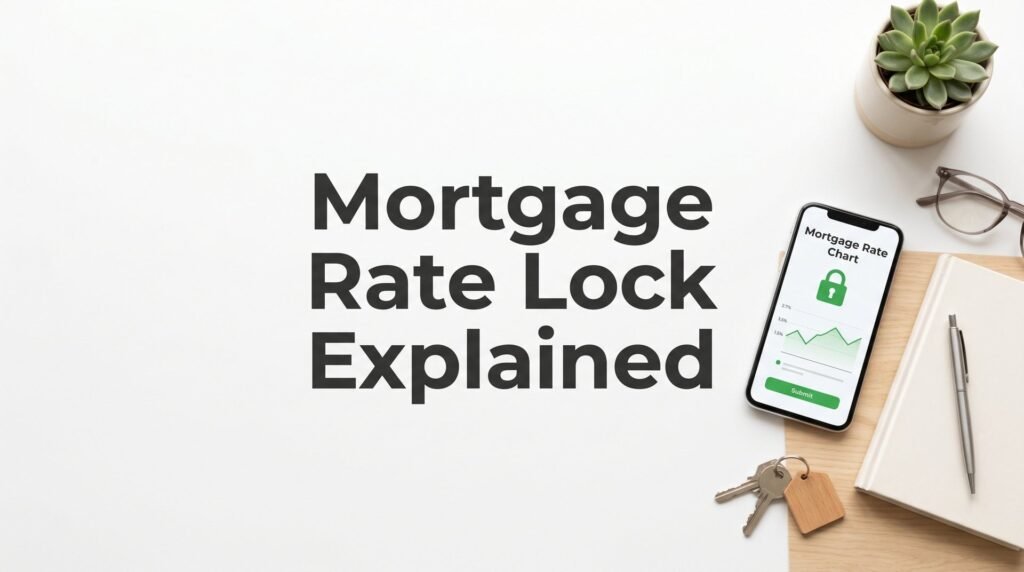
A rate lock is a lender’s written commitment to hold your interest rate for a defined period while your loan moves through processing and underwriting to the closing table. It is one of the most consequential decisions in the mortgage process, and most borrowers make it without fully understanding what they are agreeing to, what it costs, or how to time it strategically.
This article explains the mortgage rate lock from the ground up: what moves rates between contract and closing, exactly what gets locked and for how long, the real cost of different lock periods and the breakeven math, when to lock based on your transaction type and market signals, and why the source of your financing (broker versus direct lender) changes your lock options entirely.
One important note before we begin: exploring your rate lock options and getting pre-qualified does not require a hard credit inquiry. Through a soft-pull Vantage Score 4.0 approach, you can compare lender pricing and lock terms without any impact to your credit score. That matters more than most borrowers realize, and we will come back to it.
What Happens to Your Rate Between Contract and Closing
Mortgage rates are not fixed by any single institution. They are priced daily, and sometimes multiple times per day, based on activity in the bond markets, specifically the pricing of Mortgage-Backed Securities (MBS) in the secondary market, which correlates closely with 10-year U.S. Treasury yields. When Treasury yields rise, mortgage rates tend to follow. When bond demand increases and yields fall, rates typically improve.
Beyond bond market movement, rates respond to economic data releases, including the Consumer Price Index (CPI), monthly jobs reports, GDP revisions, and Federal Reserve policy signals. A single strong jobs report can push rates higher within hours. A softer-than-expected CPI reading can bring them down. The CFPB provides a useful overview of how market forces affect mortgage pricing at consumerfinance.gov.
The practical implication for homebuyers is straightforward: the rate your lender quotes today is not guaranteed to be available tomorrow, let alone in three or four weeks. Understanding mortgage rate trends and how to track them can help you make a more informed decision about when to lock.
Here is the math that makes this concrete. Consider a $400,000 purchase loan on a 30-year fixed mortgage:
At 6.75%: Monthly principal and interest payment = $2,594
At 7.00%: Monthly principal and interest payment = $2,661
Difference: $67 per month, $804 per year, and $24,120 over the full 30-year loan term.
A 0.25% rate increase on a $400,000 loan costs the borrower more than $24,000 in total interest if the loan runs to maturity. That is not a rounding error. That is a real financial consequence of not locking, or of locking too late. Use a mortgage calculator monthly payment tool to run these numbers against your own loan amount and see exactly what rate movement costs you.
The timeline exposure in Virginia is meaningful. Purchase transactions in competitive markets like Short Pump, Midlothian, and Virginia Beach often carry 21 to 30-day close requests from sellers. More standard purchase timelines run 30 to 45 days. Refinance transactions typically take 30 to 60 days from application to closing since there is no seller-driven deadline. In either case, the borrower is exposed to daily rate movement throughout the entire period unless a rate lock is in place.
Without a rate lock, you are essentially floating your rate from contract to closing, hoping the market moves in your favor. Sometimes it does. Frequently it does not. The rate lock exists precisely to remove that uncertainty from an already complex transaction.
Rate Lock Mechanics: What You’re Actually Locking and For How Long
A rate lock is a lender’s written commitment to hold a specific interest rate and points combination for a defined period. Both elements matter: the rate and the points (or lender credits) are locked together. If either changes materially, the lock may need to be repriced. Understanding how mortgage points interact with your locked rate is essential before you commit to any lock terms.
Beyond the rate and points, the lock is also tied to your loan program, loan amount, and property address. If any of these change materially during the lock period, for example you switch from a conventional loan to an FHA loan, or the purchase price is renegotiated significantly, the lock may be voided or repriced by the lender. This is why it is important to have your loan structure confirmed before locking.
Lock periods are typically available in 15, 30, 45, or 60-day increments. Some lenders offer 90-day locks, primarily for new construction where closing timelines are longer and less predictable. Each lock period carries different pricing, because the lender bears market risk for the duration of the commitment. The longer the lock, the more risk the lender absorbs, and the more that cost is passed to the borrower.
Rate Lock Period Comparison
15-Day Lock: Lowest cost, often priced at par or better. Best use case: refinances or purchases where closing is imminent and all conditions are cleared. Risk level: high if any closing delay occurs.
30-Day Lock: Standard market pricing, typically used as the baseline. Best use case: purchase transactions with clean files and aggressive close timelines (21–30 days). Risk level: moderate.
45-Day Lock: Pricing adjustment of approximately 0.125% in rate or points above 30-day pricing. Best use case: standard purchase transactions with 30–45 day close timelines, or refinances with straightforward documentation. Risk level: low to moderate.
60-Day Lock: Pricing adjustment of approximately 0.25% above 30-day pricing. Best use case: complex files, new construction, refinances with appraisal or title complexity. Risk level: low, but the cost premium must be evaluated against the certainty provided.
One feature that most borrowers never hear about is the float-down provision. Some lenders offer a float-down option that allows the borrower to capture a lower rate if market rates improve after the lock is in place, typically requiring rates to drop by a defined threshold such as 0.25% or more before the provision activates. Float-down options may carry an upfront fee or may be available as a feature on certain lock products. Not all lenders offer them, and the terms vary. When shopping lock options, asking about float-down availability is a worthwhile question that can provide meaningful protection in a volatile rate environment.
The Real Cost of a Rate Lock and the Breakeven Math
Rate lock costs are real, and they need to be evaluated against the risk they eliminate. The fundamental tradeoff is straightforward: a longer lock costs more in rate or points, but it protects against a larger window of market risk. A shorter lock costs less but leaves less room for closing delays.
Let’s work through the numbers on a $380,000 loan at a 30-year fixed rate to make this concrete.
Scenario 1: 30-Day Lock at 6.875%
Monthly P&I payment: $2,496
Total interest over 30 years: approximately $518,560
Lock cost adjustment: $0 (baseline pricing)
Scenario 2: 45-Day Lock at 7.00% (approximately 0.125% rate premium)
Monthly P&I payment: $2,529
Difference from 30-day: $33/month
Total interest over 30 years: approximately $530,440
Additional cost vs. 30-day lock: approximately $11,880 in total interest if held to maturity
Scenario 3: 60-Day Lock at 7.125% (approximately 0.25% rate premium)
Monthly P&I payment: $2,562
Difference from 30-day: $66/month
Total interest over 30 years: approximately $542,320
Additional cost vs. 30-day lock: approximately $23,760 in total interest if held to maturity
Now apply the breakeven calculation. If the 60-day lock costs 0.25% more in rate, that translates to $66 more per month. Alternatively, the 0.25% premium could be paid as discount points upfront: 0.25% of $380,000 equals $950. If you pay $950 upfront to secure the longer lock period (rather than absorbing it in rate), the breakeven is $950 divided by $66 per month, which equals approximately 14.4 months. If you keep the loan beyond 14 months, the upfront cost was worth it compared to the rate alternative.
The more important question, however, is not just the cost comparison between lock periods. It is the cost comparison between locking and not locking. If rates rise 0.375% during your 45-day closing process, the damage on a $380,000 loan is approximately $99 per month and roughly $35,640 over the life of the loan. A 45-day lock that costs $33/month more than the 30-day baseline still saves you $66/month compared to that rate increase scenario. Reviewing purchase mortgage rates in Virginia before you lock gives you a clearer baseline for evaluating whether current pricing is favorable.
Lock extension fees add another layer of cost risk. If your closing is delayed by an inspection dispute, a title issue, or an appraisal that comes in low and requires renegotiation, your lock period may expire before you reach the closing table. Extension fees typically run 0.125% to 0.375% of the loan amount per 15-day extension. On a $380,000 loan, that range is $475 to $1,425 for a single 15-day extension. Borrowers who choose a 30-day lock to save on initial pricing and then need a 15-day extension may find the extension cost eliminates the savings entirely.
The practical takeaway: choose your lock period based on a realistic assessment of your closing timeline, not just on minimizing upfront pricing. Factoring in mortgage closing costs in Virginia alongside your lock decision gives you the full picture of what you will actually pay at the table.
When to Lock: Timing Strategy for Virginia Homebuyers
Timing a rate lock is part strategy, part market awareness, and part transaction management. The right moment to lock depends on whether you are buying or refinancing, how competitive your local market is, and what the rate environment is doing.
Purchase Transactions
The standard best practice is to lock at or shortly after contract ratification, once you have a signed purchase agreement and a confirmed closing date. Locking at pre-approval, before a property is identified, wastes the lock period. Locking too late, such as waiting until underwriting is nearly complete, risks rate increases during the processing window. Getting a solid mortgage pre-approval in Virginia before you begin shopping ensures your rate lock is tied to a fully vetted loan profile.
Virginia’s active purchase markets create specific timing considerations. In Short Pump, Midlothian, Glen Allen, and parts of Chesterfield, competitive offer environments often include 21 to 30-day close requests. In those cases, a 30-day lock is often sufficient if the file is clean and documentation is ready at contract. In Fredericksburg, Spotsylvania, and Stafford, where VA loan volume is significant due to proximity to military installations, VA appraisal timelines add a variable that makes a 45-day lock more prudent. VA appraisals can take longer than conventional appraisals in some markets, and a lock that expires before the appraisal is complete creates extension risk. For current VA loan guidelines, see va.gov.
In Virginia Beach, Chesapeake, Hampton Roads, Newport News, and Suffolk, both conventional and VA loan volume is substantial. Timelines vary by transaction complexity, and borrowers in these markets should discuss realistic close dates with their lender before selecting a lock period.
Refinance Transactions
Refinances offer more timing flexibility because no seller deadline exists. Borrowers can monitor rate trends and lock when conditions are favorable. However, waiting too long in a rising rate environment is a common and costly mistake. The absence of urgency can create a false sense of control. Exploring the best refinance rates in Virginia before you lock helps you identify whether current market conditions justify moving forward now or waiting.
Market signals that suggest locking sooner: An upcoming Federal Reserve meeting with rate guidance expected, a scheduled CPI or jobs report release, bond market volatility, or a period of consecutive days of rate increases.
Market signals that suggest briefly floating: Consecutive days of rate improvement, a stable bond market, and being early in the loan process with sufficient time to wait without approaching lock expiration.
No one can predict rate movements with certainty. The value of a rate lock is not that it captures the absolute lowest possible rate; it is that it eliminates the downside risk of rates moving against you during a defined window.
Broker vs. Direct Lender Rate Locks: Why Your Financing Source Matters
Where you get your mortgage affects your rate lock options in ways most borrowers do not consider until it is too late to change course.
Direct lenders, including Rocket Mortgage, Movement Mortgage, PrimeLending, Alcova Mortgage, CapCenter, Atlantic Bay Mortgage, C&F Mortgage Corporation, Southern Trust Mortgage, Embrace Home Loans, Guild Mortgage, CrossCountry Mortgage, Freedom Mortgage, NFM Lending, Fairway Independent Mortgage, Prosperity Mortgage, RatePro Mortgage, River City Lending, and others, each operate from a single rate sheet. When you apply with a direct lender, your rate lock options are limited to what that lender offers: their lock periods, their extension fee structure, their float-down policy (if any), and their pricing at that moment. If their pricing worsens after you apply, or their lock terms are less competitive than another lender’s, you have no alternative within that relationship without starting the process over. A thorough mortgage lender comparison before you commit can reveal meaningful differences in lock terms that most borrowers never think to ask about.
A mortgage broker accesses wholesale pricing from hundreds of lenders simultaneously. The lock can be placed with whichever lender offers the best combination of rate, lock period, float-down terms, and extension fee structure at the moment the lock is needed. This structural difference is meaningful, not just for initial rate comparison, but specifically for rate lock strategy. Understanding the full mortgage broker vs. bank distinction helps clarify why broker access to multiple wholesale lenders creates a fundamentally different lock experience.
Head-to-Head Comparison: Mortgage Broker (The Mortgage Ally) vs. Direct Lender
Rate Sheets Accessed: Mortgage Broker: Hundreds of wholesale lenders | Direct Lender: Single institution’s rate sheet
Ability to Shop Lock Terms: Mortgage Broker: Can compare lock periods and pricing across lenders | Direct Lender: Limited to that lender’s lock menu
Float-Down Availability: Mortgage Broker: Can identify lenders offering float-down provisions | Direct Lender: Available only if that specific lender offers it
Lock Extension Cost Flexibility: Mortgage Broker: Can select lenders with lower extension fees | Direct Lender: Extension terms fixed by that institution
Ability to Reprice if Terms Deteriorate: Mortgage Broker: Can shift to a different lender if pricing worsens | Direct Lender: Repricing options limited within the same institution
The NoTouch Credit Advantage
There is a meaningful structural difference in how borrowers can explore these options. When a borrower applies directly with multiple lenders to compare rate lock terms, each application may trigger a hard credit inquiry. Multiple hard inquiries in a short period can affect credit scores, which in turn affects the rate the borrower qualifies for.
Through the NoTouch Credit approach using Vantage Score 4.0, borrowers can be pre-qualified and explore rate lock options across hundreds of lenders without a hard credit pull. This means the shopping phase does not cost the borrower anything in credit score impact. Once the borrower is ready to move forward and lock, a full credit authorization occurs as part of the formal application, but the exploration and comparison phase is protected. Learn more about mortgage pre-approval without a hard inquiry and how this approach protects your credit score throughout the rate shopping process.
Rate Lock FAQ: Direct Answers to the Questions Borrowers Actually Ask
Mechanics
Q: Can I lock a rate before I have a signed contract?
A: In most cases, no. Most lenders require a ratified purchase agreement and a confirmed property address before issuing a rate lock on a purchase transaction. Pre-approval establishes your qualification, but the rate lock is tied to a specific loan and property. Some lenders offer a “lock and shop” product for a premium, but these are not universally available.
Q: What happens if rates drop after I lock?
A: In a standard lock, you keep the locked rate even if market rates fall. If your lender offers a float-down provision, you may be able to capture a lower rate if rates drop by the defined threshold (typically 0.25% or more) before closing. Ask about float-down availability before locking, not after.
Q: Can I switch lenders after locking?
A: Yes, but it comes at a cost. If you switch lenders after locking, you forfeit the lock with the original lender and must start a new application with the new lender. The new lender will price from current market rates, which may be higher or lower than your original lock. Switching lenders mid-process also resets the underwriting timeline, which can jeopardize your closing date.
Q: Does locking a rate guarantee my closing costs?
A: A rate lock fixes your interest rate and points, but it does not freeze all closing costs. Third-party fees such as title insurance, appraisal, and government recording fees can still vary. Your Loan Estimate provides cost disclosures, and your lender is required to honor certain cost categories within defined tolerances under RESPA. The CFPB explains these protections at consumerfinance.gov.
Timing and Risk
Q: What if my closing is delayed?
A: If your closing extends beyond your lock expiration date, you will need to pay a lock extension fee, typically 0.125% to 0.375% of the loan amount per 15-day extension. On a $380,000 loan, that is $475 to $1,425 per extension period. Plan your lock period conservatively, accounting for realistic delays.
Q: Can a lender cancel my rate lock?
A: Lenders can void a lock if material information changes, such as a significant change in loan amount, loan program, property type, or if fraud is discovered. A lock is not unconditional. However, a lender cannot simply cancel a lock because rates have moved in the borrower’s favor. Get your lock confirmation in writing.
Q: Is a verbal rate lock binding?
A: No. A verbal rate lock is not enforceable. Always request a written rate lock confirmation that specifies the locked rate, points, lock expiration date, and extension terms. This is a basic consumer protection step.
Virginia-Specific and Broker-Specific
Q: Do VA, FHA, and conventional loans have different lock rules?
A: The rate lock mechanics are similar across loan types, but timelines differ. VA loans may require longer lock periods due to VA appraisal timelines in some markets. FHA loans follow standard lock conventions. VA loan details are available at va.gov and FHA guidelines at hud.gov. Conventional conforming loan limits for 2025 are $806,500 for single-family properties in most Virginia counties, per FHFA at fhfa.gov.
Q: Can a mortgage broker lock with multiple lenders at once?
A: No. A lock is placed with a single lender once the borrower commits to moving forward. However, a broker can compare lock terms across many lenders before placing the lock, ensuring the best available terms are selected at the time of commitment.
Q: What credit score is needed to qualify for the locked rate?
A: The locked rate is tied to the credit profile used during underwriting. Conventional loans typically require a minimum 620 score, with pricing improving significantly at 740 and above. FHA loans require a minimum 580 for 3.5% down per HUD guidelines. VA loans have no official minimum per VA guidelines, though most lenders require 580 to 620. If your credit score changes materially between pre-qualification and underwriting, your rate may be repriced.
Putting It All Together: Your Rate Lock Decision Framework
A rate lock is not a formality. It is a financial decision with real cost implications on both sides: the cost of the lock itself, and the cost of not having one when rates move against you.
The decision framework is straightforward. Start with your closing timeline, and be realistic about it. Choose a lock period that covers your expected close date with a reasonable buffer for delays. Calculate the breakeven on any extended lock cost, as shown in the math above, and compare that against the risk of a shorter lock requiring an extension. Ask specifically about float-down provisions before committing to a lock, because they can provide meaningful downside protection in a volatile market. And get everything in writing.
Working with a broker who accesses hundreds of lenders does not just improve your rate options at the start of the process. It improves your lock options throughout. The ability to compare lock periods, extension terms, and float-down availability across multiple lenders, without a hard credit inquiry during the shopping phase, gives you more control over one of the most consequential decisions in your home purchase or refinance.
If you are buying in Richmond, Henrico, Chesterfield, Fredericksburg, Virginia Beach, or anywhere across Virginia, Florida, Tennessee, or Georgia, and you want to understand your specific rate lock options without any impact to your credit score, learn more about our services and get a no-credit-hit rate quote today.