
The 20% rule is one of the most durable myths in home buying. FHA, VA, USDA, and conventional programs all allow far less, and some allow nothing. The harder question is which program costs least for your situation, and whether you can combine it with other help to shrink the cash you need at closing.
By Duane Buziak, NMLS #1110647. Below are seven strategies for using low down payment mortgage programs. Rates, mortgage insurance factors, funding fees, and limits are noted “as of October 2026” and can change, and every payment figure is an illustration built on an assumed 6.5% rate, not a quote.
1. Conventional 3% Down Programs (HomeReady and Home Possible)
Fannie Mae’s HomeReady and Freddie Mac’s Home Possible are conforming loans that allow 3% down with an income cap, generally 80% of area median income. They also let you count income from non-borrower household members or a boarder in some cases. The main draw is private mortgage insurance (PMI), which, unlike FHA mortgage insurance premium (MIP), can be cancelled once your loan-to-value ratio (LTV, the loan balance divided by the home’s value) falls low enough.
Credit score drives PMI pricing, so the same house can cost very different amounts. Suppose a $350,000 home with 3% down ($10,500) and a $339,500 loan. Principal and interest at 6.5% is about $2,146. If PMI runs 0.40% a year at a 740 score, that adds roughly $113 a month, for about $2,259. At a 660 score, assume PMI of 1.10%: about $311 a month, for about $2,457. Those PMI factors are assumptions, not quotes.
Put it into practice in this order:
- Check your expected income against the area median income limit for the property’s county.
- Get a soft credit pull mortgage pre-qualification so you see pricing without a hard inquiry.
- Complete homebuyer education if the program requires it, which is common for first-time buyers.
- Compare monthly, single-premium, and lender-paid PMI options against your expected time in the home.
The common mistake is assuming FHA is always cheaper. In the illustration above, FHA beats conventional at a 660 score but loses at 740. Compare the full payment and the lifetime MI cost. Measure the total monthly payment including MI, and the month when MI can be removed.
2. FHA 3.5% Down
FHA loans are insured by the government, which is why underwriting tolerates thinner credit. Under HUD’s FHA guidelines, you need a 580 score for 3.5% down, and scores of 500 to 579 require 10% down. FHA is not only for poor credit, though. Plenty of borrowers with solid scores choose it for the pricing when their score sits in the 620s or 660s.
On the same $350,000 home, 3.5% down is $12,250, about $1,750 more than the conventional 3% option. FHA charges an upfront MIP of 1.75% (about $5,911, usually financed, giving a loan near $343,661) plus annual MIP, which as of October 2026 is typically 0.55% for most 30-year loans with under 5% down. Payment: roughly $2,172 in principal and interest plus about $155 a month in MIP, around $2,327 in total.
The pitfall is the duration. When your down payment is under 10%, annual MIP generally lasts for the life of the loan. The way out is a refinance once equity builds.
- Confirm which score tier you are in, 580 and up or 500 to 579.
- Price the upfront MIP and decide whether to finance it.
- Set a calendar reminder to review a refinance when your LTV reaches 80% or better.
Measure the monthly cost of MIP and your projected refinance break-even: closing costs on the new loan divided by the monthly savings.
3. VA Zero-Down Loan
Eligible veterans, service members, and some surviving spouses can finance 100% of the price through the VA home loan program. There is no monthly mortgage insurance, which is the biggest structural advantage on this list. Instead, a one-time funding fee applies, which can be financed. As of October 2026, first-use, zero-down purchases carry a 2.15% fee, and it is higher for repeat use with no down payment.
Consider a $400,000 Virginia home with $0 down. The funding fee is $8,600, so the loan becomes $408,600 and principal and interest at 6.5% is about $2,583, with no MI. A comparable FHA loan has 3.5% down ($14,000), a financed upfront MIP, and about $177 a month in annual MIP, for roughly $2,659. A conventional 3% loan at a 740 score lands near $2,581 with $12,000 down. The VA payment is nearly identical to conventional, with $12,000 less cash needed.
- Get your Certificate of Eligibility before you shop.
- Check funding fee exemption. Veterans receiving VA disability compensation, among others, are exempt, and missing this can cost thousands.
- Order a VA appraisal and expect minimum property requirements.
- Check remaining entitlement if you have used the benefit before or still hold a VA loan.
Measure cash to close and the monthly payment against the equivalent FHA and conventional quotes.
4. USDA Zero-Down Loan
The USDA guaranteed program offers 100% financing, and the surprise is where it applies. Eligible areas include many suburban edges and small towns, not just farmland. Eligibility depends on two tests: the property’s location, and household income, which as of October 2026 generally must not exceed 115% of the area median.
Imagine a buyer commuting into Richmond who assumes everything near the city is excluded. She checks the address on the USDA eligibility map, finds a home on the suburban edge qualifies, and buys with $0 down. She would have paid about $10,500 or more to enter through conventional or FHA.
The costs are an upfront guarantee fee and a lower annual fee, both of which should be reviewed against current USDA figures. As of October 2026 these have been about 1.0% upfront and 0.35% annually.
- Verify the property address before you tour or write an offer.
- Confirm household income, which counts all adult household members, against the county limit.
- Review the guarantee fee and annual fee in a written quote.
- Move into full underwriting, since USDA files are manually reviewed in many cases and need time.
The classic mistake is falling for a home before checking its address. Eligibility can also change when maps are updated, so check again before contract. Measure confirmed eligibility and total fees against your FHA alternative.
5. Down Payment Assistance Stacking
Down payment assistance (DPA) pairs your first mortgage with a grant, a forgivable second loan, or a deferred second loan. Because assistance comes from a separate source, it can cover your down payment and sometimes part of closing costs. State housing finance agencies run the largest programs. Virginia Housing lists its current assistance options and eligibility rules, and terms change, so verify before you rely on them.
Illustration: a $350,000 purchase with FHA at 3.5% needs $12,250. Suppose a program provides 3% of the price, $10,500. Your out-of-pocket down payment shrinks to $1,750, though closing costs still apply. Whether you pay that assistance back is the whole question.
The most common mistake is treating DPA as free money. Some are grants, but many are repayable or forgivable only after years of occupancy. Others tie the assistance to a slightly higher interest rate on the first loan.
- Identify your state and local agency programs and read income and price limits.
- Confirm your broker is set up to work with the program, since not every broker or lender participates.
- Read the repayment triggers (sale, refinance, or paying off the first mortgage) and any rate premium.
- Apply and reserve funds before your contract deadlines.
Measure net cash to close and the lifetime cost of the second lien or higher rate. A $10,500 second at 0% costs less than the same help bought through a rate increase of 0.25% over thirty years.
6. Gift Funds and Seller Credits
Gift funds are money given to you by an approved donor, usually a relative, with no expectation of repayment. Seller credits, also called concessions, reduce your closing costs when the seller agrees to pay part of them. Together they close the gap that savings and assistance leave, and neither changes the loan itself.
Suppose a parent gifts $8,000. Underwriting needs a signed gift letter stating that no repayment is expected, the donor’s bank statement showing the funds, and proof of the transfer into your account. On top of that, the seller agrees to a credit toward closing costs, say 3% of a $350,000 price ($10,500), within the cap for your loan type.
- Collect the paper trail first: gift letter, donor statement, and transfer proof, kept together.
- Know the concession limits by loan type before you write the offer. Caps differ across FHA, VA, USDA, and conventional loans, and they vary with down payment size on conventional.
- Do the deposits early. Large unexplained deposits that arrive mid-process trigger extra conditions.
The two typical errors are moving gift money without documentation and negotiating a credit that exceeds the cap, which forces a renegotiation or leaves you short at the table. Measure how much your cash to close drops, and whether underwriting clears with no additional conditions. An account at any bank works for the transfer, as long as the funds are traceable.
7. Soft-Pull Program Comparison
The programs above overlap in confusing ways, and the lowest down payment is often not the lowest cost. A no hard inquiry mortgage pre approval lets you compare them on actual numbers, because a soft credit pull does not lower your score. You can run several scenarios before you commit anywhere. The CFPB’s rate-shopping guidance makes the same point: comparing offers saves money.
Take one borrower profile and run it through FHA, conventional 3%, and a DPA-paired option. You would see three payments, three MI durations, and three cash-to-close totals, so you can judge a lower payment today against MI that lasts longer.
- Complete the NoTouch Credit Pull pre-qualification with Duane Buziak, who works as a soft pull mortgage broker.
- Request at least three scenarios built on the same price and assumptions.
- Choose by total cost and cash needs, not by down payment alone.
The mistake to avoid is picking the smallest down payment without comparing monthly payment and MI duration. Measure the side-by-side monthly payment, cash to close, and cumulative MI over a five- to seven-year horizon, which is roughly how long many buyers stay in a home before refinancing or selling.
How the Programs Compare at a Glance
Figures below are general program rules as of October 2026. Confirm current limits before you rely on them.
- Conventional 3% (HomeReady / Home Possible): 3% down, income cap near 80% of area median, PMI that cancels, best for scores around 700 and up, and for buyers who want to remove MI later.
- FHA: 3.5% down at 580 and up, 10% at 500 to 579, upfront plus annual MIP that can last the life of the loan with under 10% down, best for mid-range scores.
- VA: $0 down, no monthly MI, a funding fee that is financeable and sometimes waived, for eligible service members and veterans only.
- USDA: $0 down, guarantee fee upfront and annually, with location and income limits, for eligible properties and households.
- DPA, gifts, and seller credits: add-ons, not standalone loans, that reduce cash to close but may add repayment terms, rate effects, or documentation.
As for who you compare with: a retail company such as Rocket or Movement quotes its own loan products. A broker can place the same borrower profile with many sources, which matters when programs, pricing, and DPA participation vary this much.
Frequently Asked Questions
Do I really need 20% down to buy a home?
No. Conventional loans start at 3% down, FHA at 3.5%, and VA and USDA at 0% for eligible buyers. Putting less than 20% down usually means paying mortgage insurance or a fee.
What is the difference between PMI and MIP?
PMI applies to conventional loans and can be cancelled when your equity is high enough. MIP applies to FHA loans, and with under 10% down it generally lasts the life of the loan.
Does a low down payment mean a worse interest rate?
Not automatically. Your rate depends mostly on credit score, loan type, and market conditions. A smaller down payment mainly raises the loan amount and the mortgage insurance cost.
Is down payment assistance free money?
Sometimes, but not always. Some programs are grants, while others are forgivable seconds or deferred loans that must be repaid on sale or refinance, and some raise your first-mortgage rate.
Will a pre-qualification hurt my credit score?
With a no credit hit mortgage application based on a soft pull, no. A soft inquiry does not affect your score, unlike the hard inquiry that comes with a full application later.
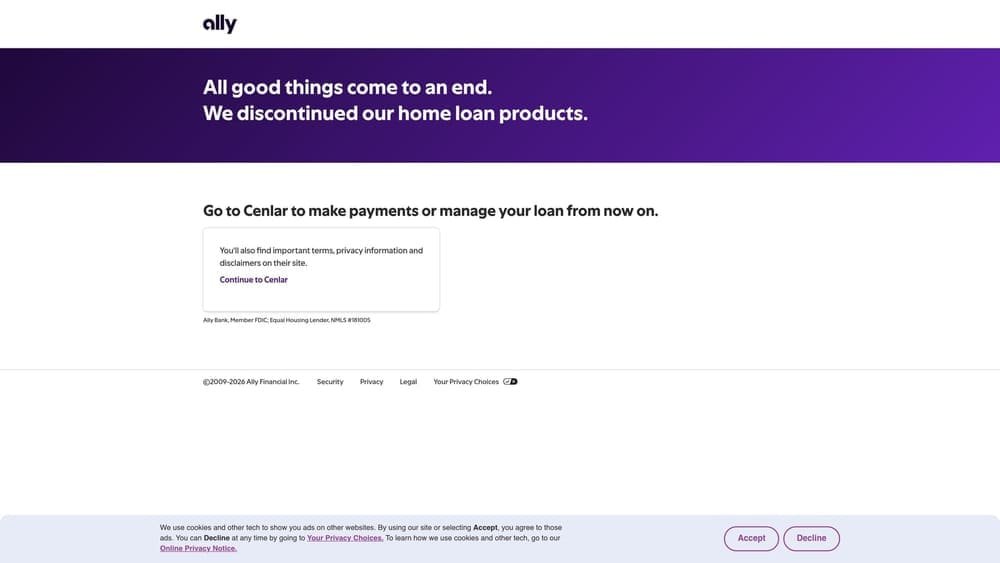
Is The Mortgage Ally by Duane Buziak affiliated with Ally Bank?
No. The Mortgage Ally by Duane Buziak is an independent mortgage brokerage and is not owned by, affiliated with, or endorsed by Ally Bank or Ally Financial.
Does Ally Bank offer the same low down payment programs?
I cannot speak for Ally Bank’s products, and our site is not connected to theirs. Check Ally Bank directly for its current offerings, and ask me for a side-by-side comparison with the programs I can place.
Can my gift funds come from an Ally Bank account?
Yes. Underwriters care that the funds are documented and traceable, not which bank holds them. You need the gift letter, the donor’s statement, and proof of the transfer.
Start With the Comparison, Then Stack the Savings
Begin with strategy 7. A soft-pull comparison tells you which programs you actually qualify for and what each costs over time. Then pair the best-fit loan, whether VA, FHA, or conventional 3%, with down payment assistance and documented gift funds, and use seller credits within your loan’s caps to push cash at closing as low as it will go. If you are not VA or USDA eligible, skip those two and spend your time on the rest.
Your dream home is within reach. Discover what hundreds of lenders can offer you in one simple search with zero impact to your credit score. Get your free mortgage rate quote today and let us shop the market to secure you the best possible terms with our client-first approach. Ask about our no-out-of-pocket closing options. Reach out to The Mortgage Ally by Duane Buziak.